
Terminology Guide
Understanding the language used in participatory renewable energy financing helps communities navigate information about collective energy projects. This guide defines key terms and concepts.
Financing and Ownership Terms
Participatory Financing
A model where multiple community members collectively contribute capital to fund a project. In renewable energy, this allows communities to jointly finance solar or wind installations that they collectively own and benefit from.
Energy Cooperative
A member-owned organization that provides energy services or generates electricity. Members typically have equal voting rights regardless of investment size. Cooperatives operate on democratic principles with benefits distributed among members.
Community Energy Project
A renewable energy installation that is collectively owned or benefits a defined community. Distinguished from corporate projects by local ownership, community participation in decisions, and benefits that remain within the community.
Crowdfunding
Raising capital from a large number of people, typically through online platforms. For renewable energy, crowdfunding allows many individuals to make small investments in community energy projects.
Community Investment Fund
A financial vehicle that pools capital from community members to invest in local renewable energy projects. Investors receive returns based on project performance while supporting community energy development.
Ownership Share
A portion of ownership in a community energy project. Share ownership typically entitles holders to a proportional share of benefits, which may include energy, financial returns, or both.
Technical and Regulatory Terms
Distributed Generation
Electricity production at or near the point of use, rather than at large centralized power plants. Community renewable energy projects typically use distributed generation, with installations located where the energy will be consumed.
Grid Connection
The physical and regulatory link between a renewable energy system and the electrical grid. Grid connection allows excess generation to be exported and enables importing electricity when generation is insufficient.
Net Metering
A billing arrangement where energy generators receive credit for excess electricity they send to the grid. Credits offset consumption during periods when generation is lower than demand. The net amount determines the bill.
Net Billing
Similar to net metering but typically involves different valuations for consumed versus exported energy. Generators may receive a specific rate for excess electricity sent to the grid, which may differ from retail electricity prices.
Renewable Energy Certificate (REC)
A market-based instrument that represents the environmental attributes of renewable electricity generation. One certificate typically corresponds to one megawatt-hour of renewable energy produced. RECs can be traded separately from the physical electricity.
Power Purchase Agreement (PPA)
A contract for the purchase of electricity from a renewable energy project. PPAs define the price, quantity, and terms under which energy will be sold, providing revenue certainty for project financing.
Capacity
The maximum amount of electricity a system can generate, typically measured in kilowatts (kW) or megawatts (MW). Capacity differs from actual generation, which varies based on weather and other factors.
Generation
The actual amount of electricity produced over a period, measured in kilowatt-hours (kWh) or megawatt-hours (MWh). Generation depends on capacity, weather conditions, and system efficiency.
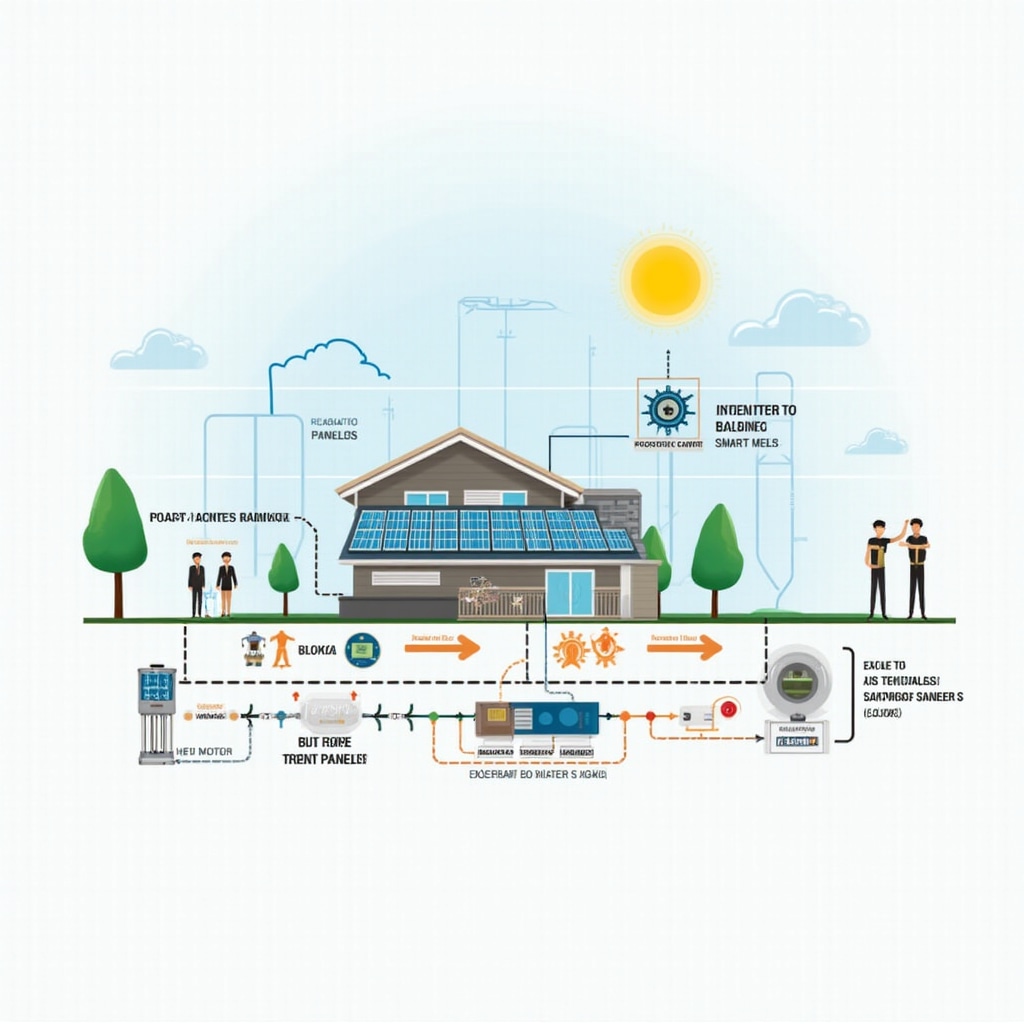
Understanding Technical Terms
Technical terminology in renewable energy can seem complex, but understanding basic concepts helps communities engage with project planning and operations. Terms like capacity and generation describe different aspects of how systems perform.
Regulatory terms like net metering and grid connection define how community projects interact with the broader electrical system and how participants are compensated for generation.
Financial and Economic Terms
Return on Investment (ROI)
The financial gain or loss from an investment relative to the amount invested. For community energy projects, ROI may come from energy savings, dividend payments, or reduced electricity costs.
Payback Period
The time required for cumulative savings or returns from a renewable energy project to equal the initial investment. Payback periods help assess project economics from an investor perspective.
Levelized Cost of Energy (LCOE)
The average cost per unit of electricity generated over a project's lifetime, accounting for all costs and generation. LCOE allows comparison between different energy sources and project structures.
Capital Contribution
The initial investment made by participants in a community energy project. Contributions may take various forms including direct payment, loans, or in-kind contributions.
Operating Costs
Ongoing expenses for maintaining and operating a renewable energy system. Operating costs include maintenance, insurance, grid connection fees, and administrative expenses.
Revenue Stream
Sources of income for a community energy project. Revenue may come from electricity sales, energy certificates, or payments from project participants for energy services.
Project Structure Terms
Governance Structure
The system for making decisions about a community energy project. Governance defines who has authority over different decisions, how voting works, and how participant input is incorporated.
Member Rights
The entitlements of participants in a community energy project. Rights typically include voting on major decisions, accessing information about project performance, and receiving benefits.
Benefit Distribution
How value from a community energy project is allocated among participants. Distribution may be based on investment size, energy consumption, or equal sharing depending on project structure.
Exit Mechanism
Provisions for participants to leave a community energy project and recover their investment. Exit mechanisms define conditions and processes for transferring or selling ownership shares.
Decision-Making Authority
The distribution of power to make different types of decisions in a community energy project. Some decisions may require all members to vote, while others may be delegated to elected representatives or managers.
Environmental and Policy Terms
Energy Transition
The shift from fossil fuel-based energy systems to renewable energy sources. Argentina's energy transition involves increasing renewable generation and changing how energy systems are owned and operated.
Carbon Reduction
Decreasing greenhouse gas emissions, typically measured in tons of CO2 equivalent. Renewable energy projects contribute to carbon reduction by displacing fossil fuel generation.
Energy Democracy
The principle that communities should have meaningful participation in energy system decisions and ownership. Participatory financing for renewable energy is one expression of energy democracy.
Environmental Attributes
The environmental benefits of renewable energy generation, including carbon reduction and air quality improvements. These attributes can sometimes be separated from the physical electricity and traded as certificates.
Feed-in Tariff
A policy mechanism that guarantees renewable energy generators a fixed price for electricity over a set period. Feed-in tariffs provide revenue certainty that can facilitate project financing.
Renewable Portfolio Standard
A policy requiring utilities or energy suppliers to obtain a minimum percentage of electricity from renewable sources. These standards create demand for renewable energy and can support community project development.
Context Matters
Many terms in renewable energy financing have specific meanings that may differ from everyday usage. Understanding these precise definitions helps communities interpret project documentation, regulations, and technical information accurately.
The terminology used can also vary between provinces and contexts within Argentina. When encountering unfamiliar terms in official documents, checking with provincial authorities or qualified professionals helps ensure correct understanding.

Using This Terminology
This guide provides general definitions of terms commonly used in participatory renewable energy financing in Argentina. Specific meanings may vary in different contexts or provinces. When these terms appear in legal documents, contracts, or regulations, their precise meaning should be verified in that specific context.
Communities engaging with renewable energy projects benefit from understanding this terminology, as it appears in regulatory frameworks, project documentation, and discussions with technical and financial professionals. Clear understanding of terms helps communities ask informed questions and make well-informed decisions about participation in collective energy initiatives.
Questions About Community Energy?
Contact us if you have questions about participatory financing for renewable energy in Argentina.
Get in Touch